Feng Shui 5 Elements: A Beginner’s Guide to Balance Your Home for Harmony & Energy
Your Home as a Living Ecosystem
Have you ever walked into a room that just felt right? Where you could instantly relax, focus, or feel inspired? That feeling is no accident. According to the ancient art of Feng Shui, it’s the result of a harmonious balance of energies—energies that we can understand and shape through the powerful, yet simple, language of the Five Elements.
Forget complex theories. Think of the 5 Elements (Wood, Fire, Earth, Metal, Water) as your fundamental design palette. Just as an artist uses colors to create mood, you can use these elemental “qualities” to paint the energy of your spaces.
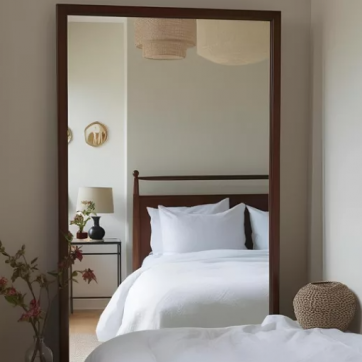
This isn’t about literal piles of wood or buckets of water; it’s about harnessing the influincing power of shapes, colors, materials, and objects to create environments that actively support your well-being, relationships, and prosperity. If you struggle with sleep, your bedroom’s energy might be off. Discover the 3 common Feng Shui mistakes in the bedroom here
In this guide, I’ll demystify each element and show you exactly how to incorporate them into your design, room by room. Let’s move from theory to practice.
Feng Shui’s 5 Elements
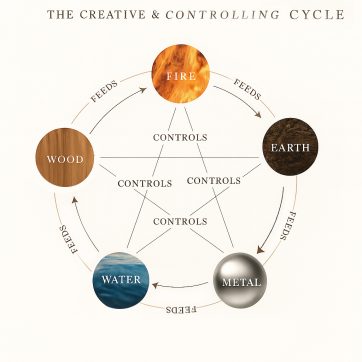
The elements are not real “things,” but phases of energy. They interact in a continuous cycle of creation and balance (more on that later). Your goal is never to use just one, but to create a harmonious conversation among them.
Here is each element broken down into its core quality, design cues, and how it FEELS in a space.
WOOD: The Energy of Growth & Vitality
-
Qualities: Expansion, new beginnings, flexibility, upward movement.
-
Feels Like: A breath of fresh air int he morning.
-
Design & Decor:
-
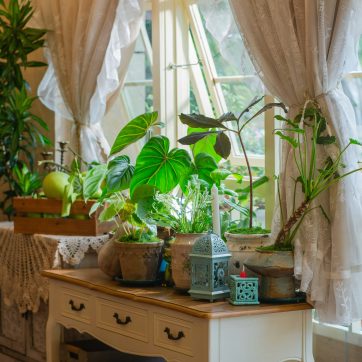
Colors: Greens, teals.
-
Shapes: Columnar, rectangular (like tree trunks).
-
Materials: Real wood furniture, bamboo, linen, cotton.
-
Objects: Healthy plants (especially with rounded leaves), floral patterns, vertical stripes.
-
-
Quick Tip for Your Home: Add a tall, healthy plant in the east area of your home (associated with family) or in your home office to encourage growth and new projects.
FIRE: The Energy of Passion & Illumination
-
Qualities: Enthusiasm, dynamism, recognition, spark.
-
Feels Like: Warmth, excitement, vibrant social energy of the summer.
-
Design & Decor:
-
Colors: Reds, strong oranges, bright yellows, magenta, and purple.
-
Shapes: Triangular, pointed, star-like, jagged.
-
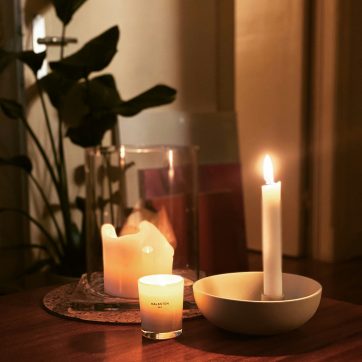
Materials: True Fire comes from light, heat, and living energy. This includes candles, lamps, fireplace flames, and sunlight. Importantly, all synthetic materials derived from petroleum (like most plastics) and all animal products (leather, fur, wool, silk) are also considered manifestations of the Fire element.
- Objects: Working fireplaces, quality lighting, candles, artwork depicting sunrises or active scenes.
- Crucial Classical Feng Shui Insight: Fire is the most potent and volatile element. Its power to catalyze activity and bring fame is matched by its potential to cause conflict, burnout, and agitation if overused or misplaced. In Classical Feng Shui, moderation and precise placement are non-negotiable. A single, well-placed candle or lamp is often infinitely more powerful and beneficial than an excess of red decor.
EARTH: The Energy of Nourishment
-
Qualities: Grounding, support, stability, nourishment.
-
Feels Like: Safe like a home, centered, calm, reliable.
-
Design & Decor:
-
Colors: Earth tones (beiges, sandy yellows, terracotta).
-
Shapes: Square, low, flat.
-
Materials: Ceramics, stone, clay, brick, crystal.
-
Objects: Square pottery, landscape paintings, crystals (like citrine or smoky quartz), low, solid furniture.
-
-
Quick Tip for Your Home: Place a beautiful ceramic vase, a stone sculpture, or a square, yellow-toned rug.
METAL: The Energy of Clarity & Precision
-
Qualities: Focus, efficiency, clarity, beauty.
-
Feels Like: Clean, crisp, organized, refined.
-
Design & Decor:
-
Colors: Whites, grays, metallics (silver, gold, chrome).
-
Shapes: Circular, arched, domed.
-
Materials: Metal frames, stainless steel, iron, marble.
-
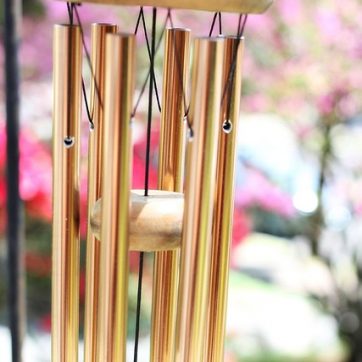
Objects: Metal bowls, wind chimes, clocks, round mirrors, minimalist art.
-
Crucial Classical Feng Shui Insight: Metal is the essential “purifying” element. Of all the elements, Metal is uniquely capable of cutting through chaotic or stagnant energy (Sha Qi) and introducing clarity. This is why, from a Classical perspective, every home benefits from a healthy presence of the Metal element. Its “sound” manifestation—such as the clear, resonant notes of wind chimes, bells, or a piano being played—is particularly effective at dispersing negative energy and creating a fresh, vibrant atmosphere. However, the placement of these Metal objects matters; their effectiveness is maximized when aligned with the specific energy patterns of the home.
-
WATER: The Energy of Flow & Philosophy
-
Qualities: Ease, wisdom, reflection, travels.
-
Feels Like: Cold, flowing, deep, serene.
-
Design & Decor:
-
Colors: Blacks, deep blues.
-
Shapes: Wavy, irregular, asymmetrical.
-
Materials: Water, music speakers.
-
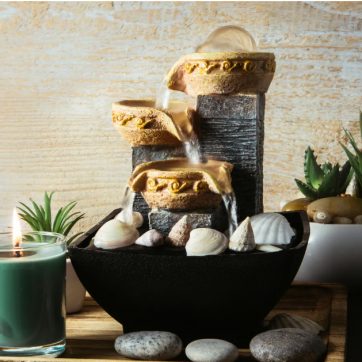
Objects: Images of water, glass decor, fountains. aquarium.
-
Crucial Classical Feng Shui Insight: Water is the most powerful element to activate prosperity, but it must be used with precision.
In Classical Feng Shui, placing a water feature like a fountain or aquarium is a high-level adjustment.
Its placement is not determined by a simple “north = career” rule, but by complex calculations of the property’s facing direction, current time period, and the specific energy map (Flying Stars).
A water feature in the wrong location can amplify negative energy just as powerfully as it can attract wealth.
Therefore, the introduction of active water is always recommended under the guidance of a qualified Classical Feng Shui consultant.
From Universal Theory to Personal Application: Why Generic Tips Fall Short
Understanding the 5 Elements provides the fundamental language of Feng Shui. However, this is where most online guides lead you astray.
Diagnosing a room’s energy as having “too much Earth” or “too much Metal” based on a feeling is not Classical Feng Shui. It’s guesswork. The true assessment comes from a rigorous analysis of:
-
The property’s facing direction (Luo Pan compass reading).
-
The time period (Flying Stars – Xuan Kong Fei Xing).
-
The interaction of the mountain and water stars in each sector.
-
The personal energy (Ming Gua) of the occupants.
What appears as “stagnant Earth energy” to the untrained eye could, in reality, be a beneficial Earth star placed to bridge Fire and Metal. Adding Wood (a plant) in that scenario, based on the generic creative cycle, could inadvertently exacerbate a hidden problem.
The 5 Elements are not decorative tools; they are precise, medical-grade adjustments in the hands of a trained consultant. Introducing the wrong element, or the right element in the wrong location or time, is at best ineffective and at worst energetically harmful.
The Classical Feng Shui Path: Analysis, Then Action
My work with clients never begins with “adding” an element. It begins with diagnosis.
-
Calculating the Chart: I establish the exact energy map of your home.
-
Identifying Patterns: I analyze which elements are naturally present, which are lacking, and—most crucially—which are in conflict or creating imbalance based on the stars’ interactions.
-
Prescribing with Precision: Only then do I craft a tailored plan. This might involve strengthening a Metal star with a wind chime in a specific corner, or using a Water element to activate prosperity. The element, the object, the placement, and the timing are all calculated.
This is the profound difference between decorating and designing with authentic Feng Shui.
Ready to Move Beyond Theory?
If this article has shown you the depth and power of the 5 Elements, you understand why their correct application cannot be learned from a blog post or a general book.
Let’s discover the true elemental blueprint of your home.
Book a complimentary 15-minute Feng Shui Discovery Call
Share