3 Feng Shui Bedroom Mistakes Sabotaging Your Sleep (And How to Fix Them Today)
Do you lie in bed for eight hours yet wake up exhausted, as if your body never truly rested? Do you close your eyes only to feel your mind speeding up instead of slowing down?
You’re not alone. In my Feng Shui consultations, I see this pattern again and again — and it often has little to do with stress or lifestyle. The real issue is usually hidden in plain sight: the energetic blueprint of your bedroom.
Your bedroom is meant to be your deepest Yin space. A sanctuary for slowing down, receiving, and fully recharging. But if the energy is not right your nervous system never fully switches off — no matter how early you go to bed or how healthy your routine is.
The encouraging part is that transforming this energy doesn’t require a renovation or a complete redesign. Over the years, I’ve identified three bedroom Feng Shui mistakes that consistently sabotage sleep for my clients. And each of them can be corrected with simple, intentional adjustments.
Below, I’ll walk you through what they are, why they matter, and exactly how you can improve your sleep — starting tonight.
Mistake #1: Bed Out of Command Position
In Feng Shui, the bed is the “throne” of the bedroom. When it is poorly positioned, the nervous system never truly relaxes.
What this looks like:
Your bed is directly in line with the door.
You sleep with your head under a window.
You cannot see the bedroom door while lying in bed.
The bed is pushed into a corner with only one side accessible (a setup that not only restricts energy flow, but also symbolically limits the space for a partner to enter your life).
In all these cases, the body stays slightly on alert. You cannot fully see who is entering the room, there is no solid support behind you, or the Chi rushes straight towards the bed instead of gently surrounding it.
Try this:
Place the bed against a solid wall with a proper headboard.
Make sure you can see the door from the bed, without being directly in line with it.
Leave space on both sides of the bed for two bedside tables, even if you sleep alone.
A bed in command position invites a deep sense of safety. When the body feels supported, the mind can let go.
Mistake #2: Mirrors Reflecting the Bed
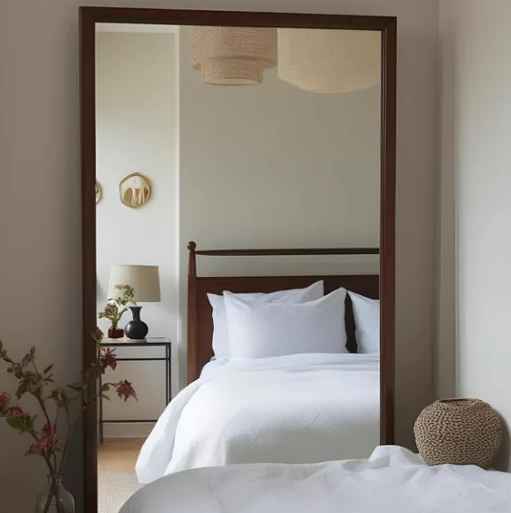
Mirrors are powerful Feng Shui tools: they amplify, expand, and redirect energy. In a living room, this can be wonderful. In a bedroom, it can quietly disrupt the very thing you’re trying to protect — your sleep.
When a mirror reflects the bed, it creates continuous energetic movement. It “doubles” the activity in the room, overstimulating Yang (active energy) at the exact moment your body needs deep Yin (restorative calm).
The effects are subtle but real: fragmented sleep, vivid or restless dreams, difficulty unwinding, and even increased tension within relationships.
The Simple Fix:
Reposition or cover any mirror that reflects the bed while you sleep. Even a temporary solution — such as a fabric panel or sliding cover — can instantly soften the space and encourage deeper rest.
Mistake #3: The "One-Size-Fits-All" Direction Myth (Sleeping Head-to-North)
One of the questions I hear most often is: “Should I sleep with my head pointing North?”
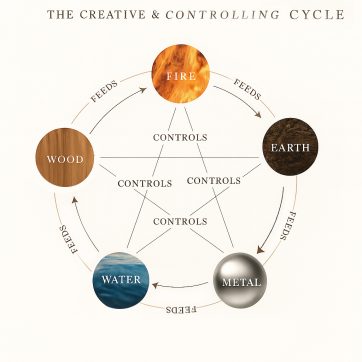
The idea that there is a single, universal “best” sleeping direction is a major oversimplification of Feng Shui. While certain orientations carry general qualities (North aligns with the Water element and can feel calm), your ideal sleeping direction is highly personal — defined by your Ming Gua (or Kua Number).
Following a generic rule can, in some cases, place you in a direction that quietly drains your energy instead of supporting it.
Why the Myth Persists
This belief doesn’t come from Classical Feng Shui. It mainly originates from Vastu Shastra (which advises against sleeping with the head toward the North) and from various magnetic-field theories circulating online. These ideas often contradict one another — some claim North is beneficial, others say it is disruptive — which adds confusion.
In Feng Shui, however, there is no universal “good” or “bad” direction.
Your ideal sleeping direction is personal and depends on your Ming Gua, not on a single rule for everyone.
✔ Find Your Ming Gua
Your Gua number — calculated from your full birth date and gender — reveals your four supportive directions and the four you should avoid.
It is the energetic blueprint that guides how you sleep, work, and align your home with your natural Chi.
Use the calculator below to discover your Ming Gua number, and contact me if you’d like to understand how your personal orientation can transform the energy of your bedroom and your entire home.
Discover Your Ming Gua
Enter your full birth date and gender to reveal your personal Gua number.
Your Ming Gua:
Share